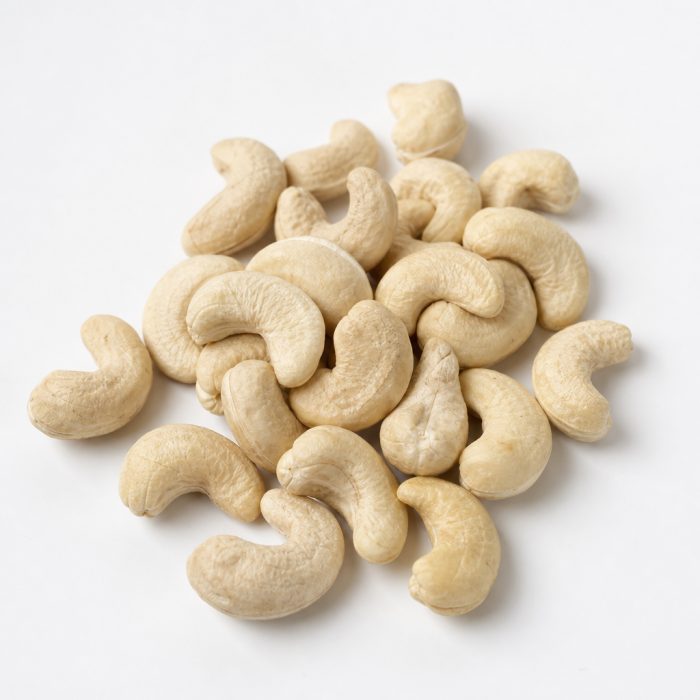
Cashew grades explained: wholes, splits and pieces
A practical look at white wholes, splits and pieces, and how to choose the right grade for snacking or manufacturing.
Quality
To specify a nut grade for consistent supply, define four things in writing: the size or count (for example W320 cashews or 23/25 almonds), the form (whole, split, pieces, blanched or in-shell), the origin, and the packing. A complete specification lets you compare suppliers fairly and hold every delivery to the same standard, lot after lot.
"Send me your best price on cashews" is how inconsistent supply begins. Nuts are not a single commodity - each is sold in a ladder of grades that differ in size, form, colour and processing, and the price moves sharply between them. The buyers who get consistent deliveries are the ones who specify precisely.
A grade is shorthand for a set of measurable characteristics. For most nuts it bundles together the kernel size (expressed as a count), the form, the colour band and any processing such as blanching or roasting. Two lots can both be "cashews" and yet be completely different products at very different prices.
Getting fluent in grades is the single most useful skill a nut buyer can develop. It removes ambiguity from quotes, protects you against substitution, and makes a sample meaningful.
Most nuts are sized by count - the number of kernels in a fixed weight. The convention varies by nut, which catches buyers out:
The key rule: a lower count number means a larger, usually more expensive kernel. Always state the count, not just the product.
After size comes form, and it has a big effect on both price and suitability. Whole kernels command a premium for visible applications - retail packs, gifting, garnishing. Splits, pieces and granules cost less and are ideal where the kernel is processed into a bar, spread, bakery mix or coating, and appearance matters less.
Specifying the right form is where buyers most often save money without losing quality: if a cashew is going into a cereal product, large pieces deliver the same flavour as a W320 whole at a better cost.
Colour grades matter for walnuts (extra light through to amber) and for raisins (golden versus green). Processing adds another layer: almonds can be natural or blanched, whole, sliced or ground; peanuts can be in-shell, natural red-skin or blanched. Each step changes the product and the price, so each belongs in your specification.
The table below summarises how the main lines are graded and how the counts are read. It is a starting point for a specification, not a substitute for one - always confirm the exact grade and origin with your supplier.
| Nut | Sized by | Example grades | Larger kernel | Common forms |
|---|---|---|---|---|
| Cashews | Count per pound | W180, W240, W320 | Lower number (W180) | Whole, splits, large/small pieces, baby bits |
| Almonds | Count per ounce | 23/25, 27/30 | Lower number (23/25) | Natural, blanched, whole, sliced, ground |
| Pistachios | Count per ounce (in shell) | 21/25, 26/30 | Lower number (21/25) | In-shell, kernels whole or split |
| Peanuts | Count per ounce | 40/50, 50/60 | Lower number (40/50) | In-shell, blanched, red-skin |
| Walnuts | Colour and form | Light halves, light pieces | Halves over pieces | In-shell, halves, pieces, by colour band |
The recurring rule across the count-graded nuts is the same: a lower count number means a larger kernel, because fewer kernels make up the fixed weight. Walnuts are the exception, graded primarily by kernel colour and by whether they are halves or pieces rather than by a count.
The right grade is the one that fits your finished product, not automatically the largest or most expensive. A useful way to think about it is to start from where the nut ends up:
Matching grade to application is the single biggest lever a buyer has on cost without touching quality. Paying for W180 wholes that are then milled into a paste is money spent on an appearance no one will ever see.
Here is what a complete, holdable specification looks like in practice, for a cereal manufacturer buying cashews as an ingredient: "Cashew kernels, white splits (SW), Vietnam or India origin, moisture below the agreed limit, free from foreign matter, vacuum packed in 25lb cartons, aflatoxin tested on request." Every element of that line can be checked on arrival, and any supplier can quote it on the same basis. Compare that with "best price on cashews", which can be answered with almost anything.
A few errors come up again and again. Naming the product but not the count, so the supplier ships their cheapest grade. Specifying a form that is finer or more processed than the application needs, and overpaying. Leaving origin open on a line where origin genuinely changes the flavour or colour. And omitting packing, so the goods arrive in a format that does not suit your handling. None of these are complicated to avoid; they simply require writing the specification down in full before asking for a price.
A workable nut specification names: the product, the grade or count, the form, the origin (or acceptable origins), the packing format, and any food-safety requirement such as aflatoxin testing. With that in hand, every quote is comparable and every delivery can be measured against an agreed standard.
If a supplier quotes without referencing grade, count or origin, treat it as a warning sign. A serious importer will ask for these details before quoting, because they want to ship the right product the first time. Keep your agreed specification on file, refer to it on every order, and check the first delivery of any new grade against it carefully - that discipline is what turns a one-off good order into consistent supply, lot after lot.
A lower count number means a larger kernel. Counts measure how many kernels make up a fixed weight, so fewer kernels per pound or ounce means each one is bigger. W180 cashews are larger than W320; almonds 23/25 are larger than 27/30.
Whole kernels are intact and command a premium for retail and presentation. Splits are half-kernels, and pieces are broken kernels - both cost less and suit bakery, cereal, spreads and coatings where the kernel is processed and appearance matters less.
Match the grade to the application. Use whole kernels where they are seen, and splits, pieces or granules where the nut is an ingredient. Describe your finished product and a good importer will recommend the grade that protects your margin.
Origin affects flavour, colour, size availability and price, and it changes through the season. Naming acceptable origins lets a supplier keep you in continuous supply when one region has a difficult harvest.
Keep reading
A practical look at white wholes, splits and pieces, and how to choose the right grade for snacking or manufacturing.
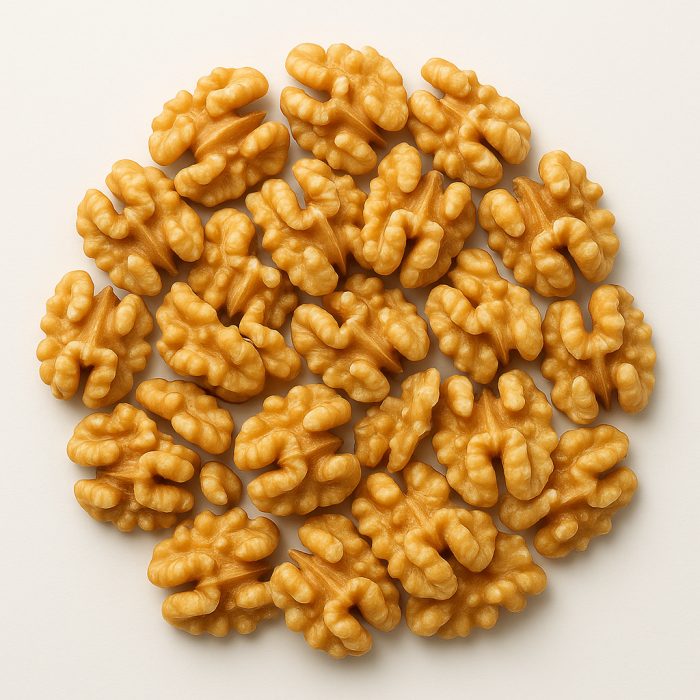
From origin checks to incoming inspection, the controls that keep specification consistent across every consignment.
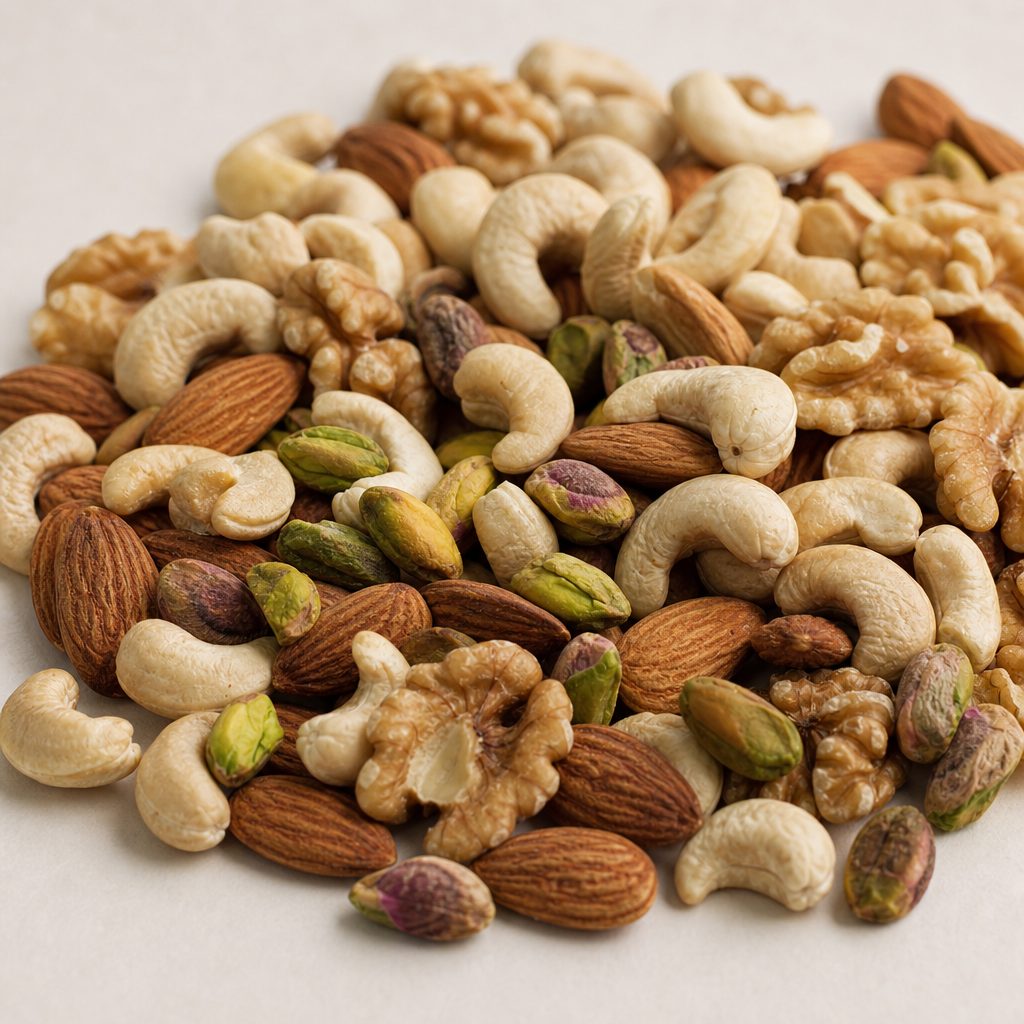
What separates a dependable supply partner from a commodity broker, and the questions every trade buyer should ask before placing an order.
Enquiries
Share your product, grade, volume and timing. One of our experienced team will respond promptly with availability and a quotation.