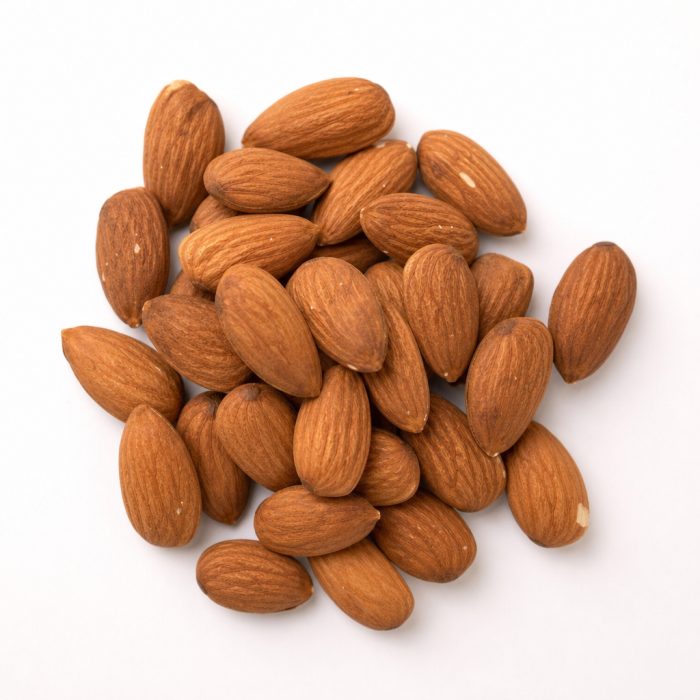
How to specify nut grades for consistent supply
Counts, sizes and skin types explained, with a simple framework for writing a specification your supplier can hold.
Sourcing
To source premium nuts and dried fruits at wholesale, write a precise specification first (product, grade or count, form, packing and food-safety needs), choose an importer who buys across multiple origins for continuity, and confirm how they control quality on every consignment. Judge a supplier on grade consistency and reliability over repeat orders, not on the lowest opening quote.
Buying nuts and dried fruits at wholesale looks simple until the first inconsistent delivery lands. A grade that drifts between lots, moisture that runs high, or a shipment that arrives three weeks late can quietly undermine an entire production run. Choosing the right supply partner is one of the most important decisions a food business makes, and it deserves more thought than a price list.
This guide sets out what to look for, the questions worth asking, and the signals that separate a dependable importer from a commodity broker. It is written for the people who actually carry the risk: buyers, NPD managers, packers and production teams who need the same grade, lot after lot.
Price matters, but it is the last thing to settle, not the first. Begin by writing down exactly what you need: the product, the grade or count, the form (in-shell, kernel, blanched, roasted), the packing format, and any food-safety requirements. The clearer your specification, the easier it is to compare suppliers fairly and to hold them to what they promised.
For cashews, that means naming a grade such as W240 or W320 rather than simply asking for "cashews". For almonds, it means stating whether you need Non Pareil or Independence, natural or blanched, whole, sliced or ground. A precise specification removes ambiguity from the quote and protects you when the goods arrive.
A good supplier will welcome a tight specification. If a quote arrives without reference to grade, count or origin, treat that as a warning sign rather than a bargain. Vague quotes almost always hide a substitution further down the line.
Origin shapes quality, price and availability. Cashews from Vietnam and India, almonds from California, Spain and Australia, pistachios from Iran, the USA and Turkey, walnuts from the USA, Chile and China: each origin has its own character and its own seasonal rhythm. A supplier who buys across several origins can keep you covered when one region has a difficult harvest or a sudden price spike.
The best supply relationships are built on continuity. When a market tightens, it is the buyers with real relationships at origin who still get served.
Ask where a product is sourced and whether alternative origins are available. A serious importer will know their packers and processors personally, visit them, and be able to tell you why a particular origin suits your application. Transparency here is one of the strongest indicators of a dependable partner.
Quality control should be a process, not a promise. A credible supplier can explain how they check incoming consignments and what happens when something falls short of specification. Look for:
For oil-rich products such as walnuts and pistachios, ask specifically about stock rotation and storage conditions. Freshness fades quickly when these are neglected, and rancidity is the most common avoidable complaint in the trade.
The right grade is the one that fits your process, not necessarily the most expensive. Whole W180 cashews command a premium for gifting and premium retail, but if the kernel is going into a cereal bar or a spread, splits, large pieces or baby bits deliver the same flavour at a far better cost. The same logic applies across the range: light walnut halves for presentation, light pieces for bakery; in-shell pistachios for snacking, green kernels for confectionery.
A good importer will steer you toward the grade that protects your margin rather than simply selling up. If you are unsure, describe the finished product and let them recommend.
Beyond product and price, the commercial structure of a supply relationship matters more than buyers often expect. Clarify minimum order quantities early: a flexible importer will supply from a quarter pallet through to full pallets and direct container loads, so you are not forced to over-order. Ask about lead times honestly, and whether forward booking is available on the lines you depend on, so price and supply are protected when markets move.
Year-round availability is a genuine advantage. Importers who hold stock across the range can quote and despatch quickly, where a broker working order-to-order leaves you exposed to every market wobble.
Anyone can get the first delivery right. The real test is the tenth. Consistency of grade, accuracy of paperwork and honesty about lead times are what keep a production line running smoothly month after month.
Before committing to volume, run a smaller trial order and judge the whole experience: the quality of the product against the agreed specification, the clarity of communication, the accuracy of the documentation, and how any issue is handled when it arises. How a supplier behaves when something goes wrong tells you more than a flawless first delivery ever will.
For any food business, an importer's paperwork is part of your own due diligence, not an optional extra. A dependable supplier provides product specification sheets, health certificates and, where relevant, test data such as aflatoxin results as a matter of course, and can trace a consignment back to its origin and processor. This documentation protects you in three ways at once: it confirms you received what you specified, it supports your own food-safety and labelling obligations, and it gives you a clear position if a customer or auditor ever asks where an ingredient came from.
Treat reluctance to provide paperwork as a serious warning sign. A supplier who cannot readily produce a specification or a certificate either does not have proper control of their supply chain or does not want you to see it - and neither is a basis for a long-term relationship.
When you are comparing two or three suppliers, it helps to judge them on the same criteria rather than on whichever one quoted lowest that week. The points below capture what actually determines whether a supply relationship will hold up:
| What to check | A dependable importer | A warning sign |
|---|---|---|
| Specification | Asks for grade, count, form and origin before quoting | Quotes a single price with no detail |
| Origins | Buys across several origins and explains the trade-offs | Vague about where product comes from |
| Stock | Holds UK stock and can despatch quickly | Lead time always matches a shipping schedule |
| Documentation | Provides specs, certificates and test data freely | Slow or reluctant to share paperwork |
| Flexibility | Supplies from a quarter pallet to a container | Rigid minimums that force over-ordering |
| Communication | Flags problems early, answers straight | Goes quiet when something is difficult |
You do not need a complicated system to use this. Run a new supplier against these points on the first one or two orders, and you will know quickly whether they belong on your approved list.
Food supply is a relationship business. A responsive team that understands the trade, answers the phone and gives you a straight answer is worth a great deal when timing is tight or a specification needs adjusting. Technology helps, but it is people who solve problems, and a real account contact who knows your business is one of the most underrated assets in a supply chain.
The best relationships are reciprocal. Give your important suppliers a clear forward view of your needs, pay on agreed terms, and consolidate your business rather than scattering it across a dozen brokers, and you become the kind of customer a supplier protects when product is scarce. A genuine partnership, built over repeat orders, is worth more to a growing food business than any single sharp price.
Specify clearly, understand origin, insist on real quality control, match the grade to the application, get the commercial terms right, test reliability over time and value the relationship. Get those things right and you turn a routine purchase into a genuine competitive advantage, with consistent ingredients and a supplier you can depend on.
If you are reviewing your supply of nuts, dried fruits, seeds or specialty ingredients, our team would be glad to help. Make an enquiry and we will come back with availability and a quotation.
It depends on your application. W180 and W210 are large whole kernels for premium retail and gifting; W320 is the most popular all-round grade; splits and pieces suit bakery, cereal and spreads at a lower cost. Describe your finished product and a good importer will recommend the right grade.
A flexible importer supplies from a quarter pallet upward, through to full pallet loads and direct container shipments. This lets packers and manufacturers order the quantity that suits their production rather than over-committing.
Agree the grade and specification in writing, request a product specification sheet and, where appropriate, a sample. Run a smaller trial order first and check the goods against the spec for size, colour, moisture and cleanliness before scaling up.
No single origin is best; each has its strengths. Cashews come mainly from Vietnam and India, almonds from California, Spain and Australia, pistachios from Iran, the USA and Turkey. A supplier buying across multiple origins gives you continuity when one region has a poor harvest.
Keep reading
Counts, sizes and skin types explained, with a simple framework for writing a specification your supplier can hold.
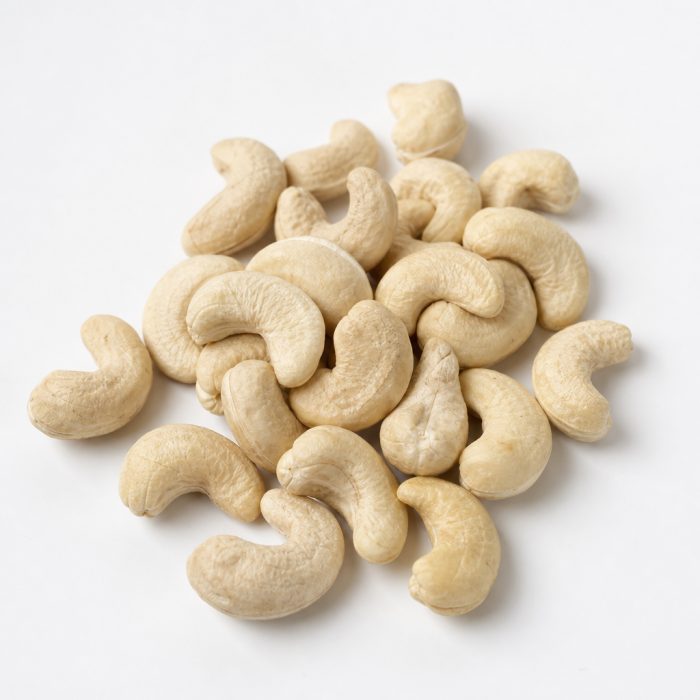
A practical look at white wholes, splits and pieces, and how to choose the right grade for snacking or manufacturing.
From origin checks to incoming inspection, the controls that keep specification consistent across every consignment.
Enquiries
Share your product, grade, volume and timing. One of our experienced team will respond promptly with availability and a quotation.