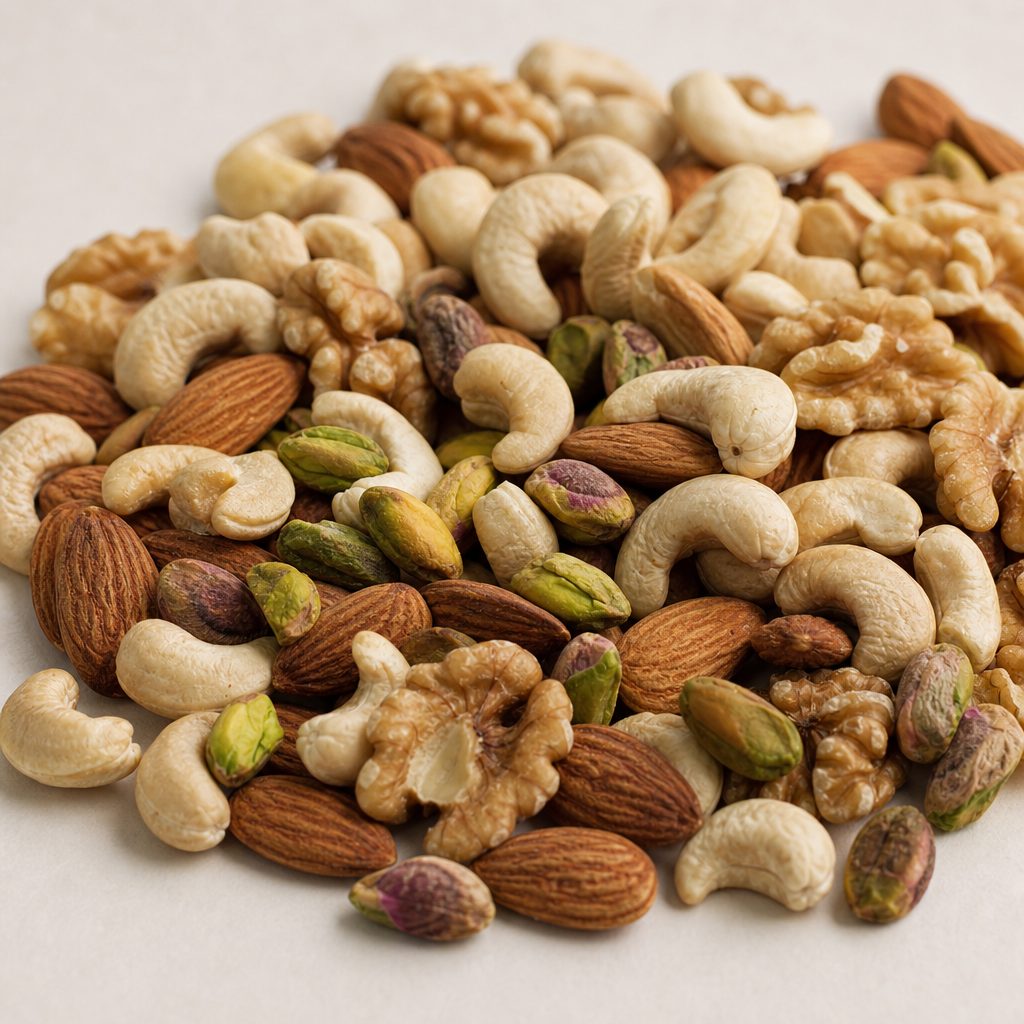
A buyer's guide to sourcing nuts and dried fruits
What separates a dependable supply partner from a commodity broker, and the questions every trade buyer should ask before placing an order.
Quality
Good quality control in food importing is a continuous, documented process: selecting and auditing suppliers at origin, agreeing specifications in writing, inspecting every incoming consignment for size, colour, moisture and foreign matter, holding health certificates and test data, and storing stock correctly. The proof is consistency - the same grade, lot after lot.
Any supplier can promise quality. The ones worth trusting can explain exactly how they deliver it - and show you the paperwork. For a food manufacturer, an importer's quality process is not a nicety; it is what protects your production line, your customers and your own due diligence.
For a UK food manufacturer, packer or distributor, the quality of an imported ingredient is your quality. If a lot of cashews arrives over-sized, high in moisture or contaminated, it is your production run that stops, your customer who complains and your due-diligence file that comes up short. That is why understanding what genuine quality control looks like - and how to test for it before you commit volume - is one of the most valuable skills a food buyer can have.
The most important quality decisions are made long before a container reaches Felixstowe. They are made when an importer chooses which packers and processors to work with, and how closely they manage them. A serious importer selects suppliers carefully against the grade and food-safety standards they need, visits them, audits them in person, and builds long-term relationships rather than chasing the cheapest spot price on any given week.
This matters because most quality problems are designed in at source. A processor cutting corners on sorting, drying or storage will ship inconsistent product no matter how carefully it is inspected on arrival. By the time a sub-standard lot lands in the UK, the cost and disruption of rejecting it are already significant. Catching quality at origin is cheaper and more reliable than catching it at the dock.
The single most revealing question you can ask a prospective importer is: when did you last visit your suppliers, and what do you check when you are there? A confident, specific answer signals an importer who treats origin as part of their quality system. A vague one signals a trader who buys whatever is offered.
Quality control is meaningless without a specification, because "quality" on its own is subjective. The specification is the written, agreed definition of exactly what you are buying, and it is the document every later check is measured against. A complete ingredient specification typically covers:
Agree this in writing before the order is placed. With a clear specification, every delivery can be judged objectively and every supplier compared fairly. Without one, you are relying on goodwill - and goodwill is not a food-safety control.
Food businesses in the UK operate under a defined legal framework, and a good importer works within it as a matter of course. The headline obligations include:
Many serious suppliers also hold a recognised audit certification such as BRCGS or comply with ISO 22000. These are not legal requirements for every importer, but they are a strong external signal that a quality-management system exists and is independently checked.
When a consignment arrives, it should be checked against the specification, not simply booked into stock. Disciplined incoming inspection looks at:
A lot that falls short of specification should be quarantined and resolved, not quietly blended in or passed along. How a supplier handles a sub-spec consignment tells you more about their standards than a hundred perfect deliveries. The honest ones flag the problem, hold the stock and put it right.
Documentation is not bureaucracy; it is the evidence your own auditors, retailers and enforcement officers will ask to see. For every line, a dependable importer should be able to provide a product specification and, where relevant, a health certificate. For higher-risk categories, analytical testing should be available on request - aflatoxin testing on nuts and dried fruit being the most common example.
Crucially, traceability should run both ways. A good supplier can tell you the origin and processor of a specific lot, and can identify which customers received it. This one-step-back, one-step-forward traceability is a legal requirement and the foundation of any product withdrawal or recall.
Quality control does not end at inspection. Nuts and dried fruits are sensitive to heat, light, humidity and time. Oil-rich nuts such as walnuts and pistachios are particularly prone to rancidity if stored warm or held too long, and rancidity is the most common avoidable complaint in the trade. Dried vine fruits can dry out, harden or sugar if conditions are wrong.
The controls that protect freshness are unglamorous but decisive: cool, dry, dark storage; sound, sealed packaging; pest management; and disciplined stock rotation so that nothing is held beyond its best. An importer who carries stock well is delivering quality every day, not just on the day a container clears.
Every control described here exists to serve one outcome - making the tenth delivery as good as the first. Any supplier can get a single shipment right, especially the sample. The discipline is in repeating it: the same grade, the same count, the same colour, the same paperwork, order after order, season after season.
That consistency, backed by documentation and honest communication when something is tight, is the truest measure of a food importer's quality. It is also what lets you plan your own production with confidence, hold your own specifications to your customers, and stand behind the products you make.
If you are evaluating a new ingredient supplier, a short, pointed set of questions will tell you most of what you need to know:
A supplier who answers these clearly and specifically is one you can build a dependable supply on. Vague answers are a warning - because in food, the cost of poor quality control is never just the rejected lot. It is the production downtime, the customer complaint and the reputational risk that follow.
Product specifications and health certificates for every line, and test data such as aflatoxin results on request for higher-risk products. This evidence supports your own food-safety and due-diligence obligations.
Each consignment is checked against the agreed specification for size and count, colour, moisture, freedom from foreign matter and defects, and packaging integrity, before it is accepted into stock.
Nuts and dried fruits are sensitive to heat, light and humidity. Oil-rich nuts such as walnuts and pistachios can turn rancid if stored poorly or held too long, so cool, dry storage and stock rotation are essential to protect freshness.
Ask how they select and audit suppliers, whether they agree specifications in writing, how they inspect incoming stock, what documentation they provide, and how they handle a lot that falls short. Consistency across repeat orders is the ultimate proof.
Keep reading
What separates a dependable supply partner from a commodity broker, and the questions every trade buyer should ask before placing an order.
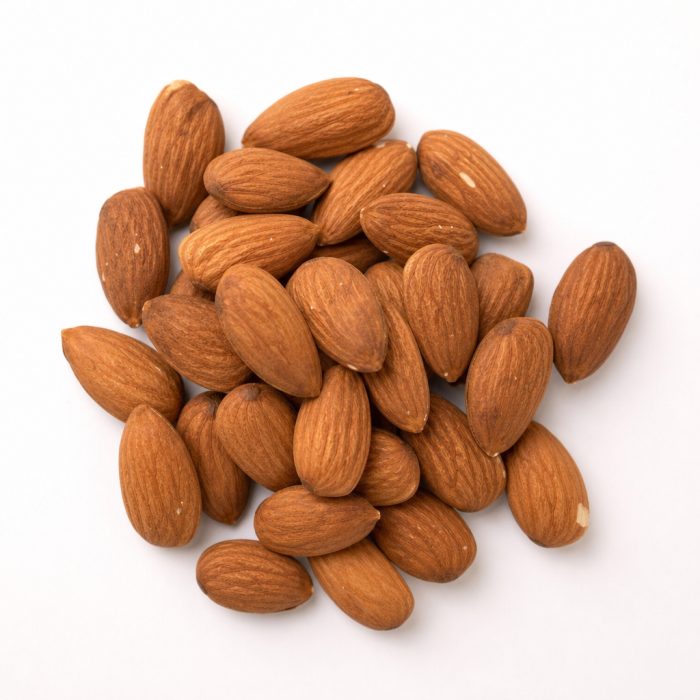
Counts, sizes and skin types explained, with a simple framework for writing a specification your supplier can hold.
Multiple origins, sensible stock and honest lead times: how to keep production moving when markets get tight.
Enquiries
Share your product, grade, volume and timing. One of our experienced team will respond promptly with availability and a quotation.