A buyer's guide to sourcing nuts and dried fruits
What separates a dependable supply partner from a commodity broker, and the questions every trade buyer should ask before placing an order.
Supply
A resilient wholesale food supply chain rests on four things: buying across multiple origins so one poor harvest does not stop you, working with a supplier who holds stock year-round rather than buying order-to-order, using forward booking to lock price and supply on key lines, and choosing partners who quote honest lead times. Together these keep production moving when markets move.
Supply chains are invisible until they break. A single-origin strategy looks cheap right up to the moment that origin has a bad harvest or a price spike - and then your production line is the one that stops. Resilience is not expensive; it is just deliberate.
Resilience is not the same as paying more. It is the ability to keep production running at a known cost when something goes wrong upstream, and something usually does. In the nut, dried fruit and spice trade the disruptions are predictable in type even when they are not predictable in timing: a poor harvest in one origin, a sudden currency swing, congestion at a port, a new import control, or a competitor buying up an entire grade ahead of you. A resilient supply chain is one where any single one of those events is an inconvenience, not a stoppage.
The buyers who handle these events calmly have usually done the same unglamorous work in advance. They know where each line comes from and what the alternative is. They hold enough stock to ride out a delay. They have agreed terms with a supplier who carries inventory rather than chasing it. None of that is expensive on its own; what is expensive is discovering you have none of it on the morning a container fails to arrive.
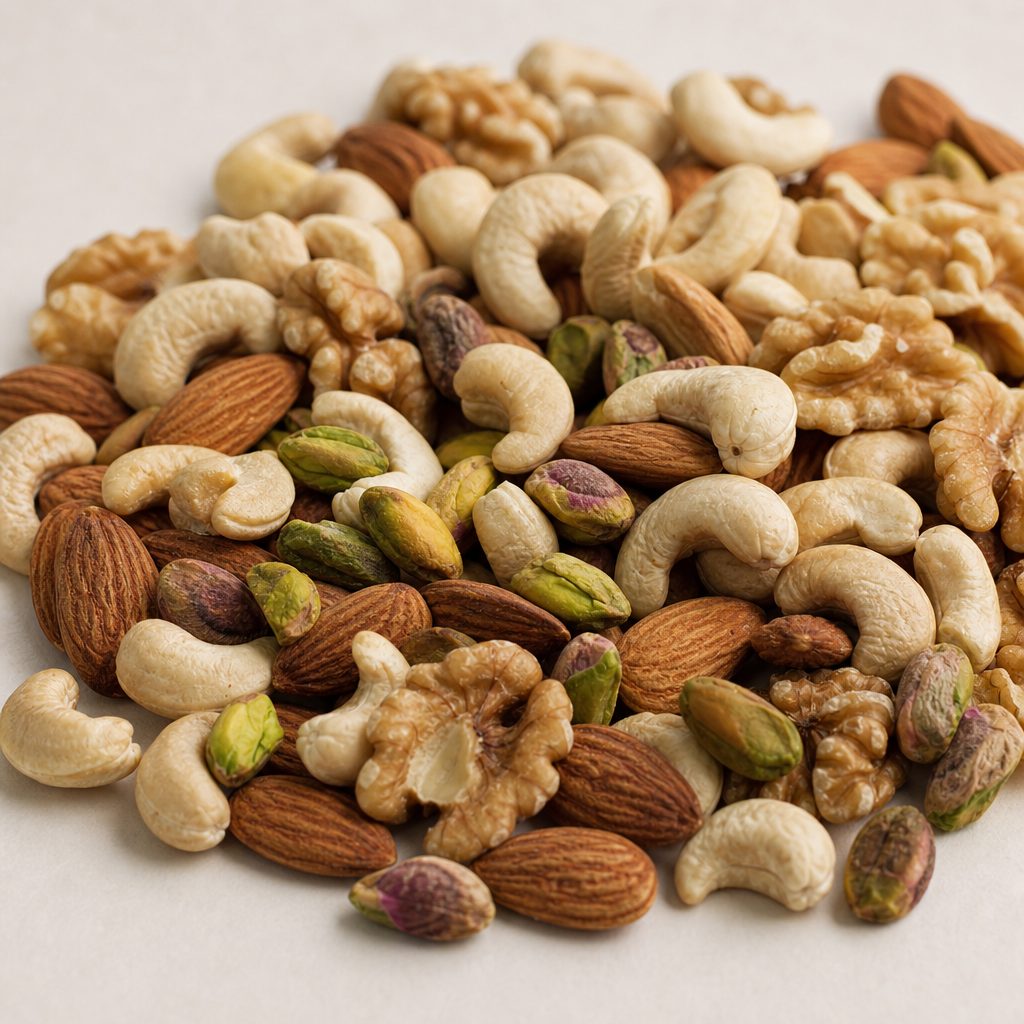
The most common supply-chain weakness is dependence on a single source. Crops fail, currencies move, ports congest and political events disrupt trade. A supplier who buys the same product across several origins - cashews from Vietnam and India, almonds from California, Spain and Australia, pistachios from Iran, the USA and Turkey, walnuts from the USA, Chile and China - can keep you covered when any one region has a difficult season.
Diversification is not only about the country on the certificate. It is about having a genuine second route to the same grade. Two origins that both depend on the same shipping lane, or the same processor, are less independent than they look. When you assess a supplier, ask not just where a product comes from, but what the realistic alternative is, how quickly they could switch to it, and what it would do to the price. Optionality that can be exercised in days is resilience; optionality that takes three months to arrange is a slide on a slide deck.
The cost of a second origin is a slightly higher price in the good years. The cost of not having one is a stopped production line in the bad year. The maths almost always favours the second origin.
Most supply scares are not shortages, they are timing gaps: the stock you had ran out a fortnight before the stock you ordered arrived. The fix is to size your safety stock against your actual replenishment lead time rather than a comfortable assumption. Lead times in this trade vary widely by product and origin, and the honest planning number is the one that includes shipping, customs clearance and your own goods-in process, not just the supplier despatching the order.
As a rough planning guide, the replenishment picture looks like this:
| Supply route | Typical lead time | Sensible buffer |
|---|---|---|
| UK stock held by your importer | 1 to 5 working days | 1 to 2 weeks cover |
| Forward-booked, called off from held stock | 1 to 2 weeks | 2 to 4 weeks cover |
| Fresh container shipment from origin | 6 to 12 weeks | 8 to 14 weeks cover |
The point of the table is not the exact figures, which move with the market, but the principle: the further upstream you have to reach to replace stock, the more cover you need to carry. Buying from an importer who holds UK stock collapses that buffer dramatically, which is why it matters so much to resilience.
There is a real difference between an importer who holds stock across the range year-round and a broker who buys only once you order. The importer can quote and despatch quickly and absorbs short-term market wobbles; the broker passes every fluctuation straight to you and is exposed whenever supply tightens. For dependable production, buy from someone who carries stock.
You can test this directly. Ask a prospective supplier what they currently hold of the grades you use, and how quickly they could despatch a pallet today. A business that genuinely carries inventory will answer easily. One that hesitates, or quotes a lead time suspiciously close to a shipping schedule, is buying to order and calling it stock.
For the lines your production cannot do without, forward booking lets you secure price and supply ahead of need. It protects your costing against a rising market and guarantees availability through a tight period. It is one of the most underused tools in food buying, and a good importer will offer it on selected items.
Forward booking works best on the few lines that genuinely drive your cost and your output - the cashew grade in your bestselling mix, the raisin in your core bakery line - rather than across everything. Booking a season of demand on a critical line removes it from the list of things that can go wrong, and lets you put your attention on the lines that are easier to replace at short notice. It also signals to a supplier that you are a serious, planning customer, which is exactly the kind of buyer who still gets served when supply is short.
Price on the quote is rarely the whole price. Currency movement between order and payment can quietly erode a margin, which is one reason a supplier who holds UK stock in sterling removes a risk you would otherwise carry. The Incoterms on the deal decide who is responsible, and who pays, if goods are delayed or damaged in transit. And a lot that arrives slightly off-specification carries a hidden cost in reworking, downgrading or rejecting it. A resilient supply chain accounts for these, rather than being surprised by them after the event.
An optimistic lead time that slips is worse than a realistic one you can plan around. The suppliers worth keeping are the ones who tell you the truth about timing, flag problems early, and give you a straight answer when something is tight. That honesty is what lets you plan your own production with confidence.
Watch how a supplier behaves the first time something is genuinely difficult. Do they tell you early, while you can still act, or do they go quiet and hope? Early, honest communication when a shipment is delayed is worth more than a flawless record in easy conditions, because it is precisely in the hard moments that resilience is tested.
Resilience is easier to manage when it is measured. A simple supplier scorecard, reviewed each quarter, turns vague impressions into something you can act on. The criteria that matter most are not subtle:
A supplier who scores well on these is a resilience asset in their own right. One who scores poorly is a risk you are carrying whether or not it has bitten you yet.
Consider a snack manufacturer whose bestselling line depends on a single grade of cashew from one origin, bought order-to-order to keep cash tied up in stock to a minimum. It runs smoothly for a year. Then that origin has a poor harvest, the grade tightens, and the price jumps. Buying to order, the manufacturer pays the new price immediately and waits ten weeks for the next shipment, during which the line is rationed.
The same manufacturer, working resiliently, would have bought from an importer holding UK stock across both Vietnamese and Indian cashews, forward-booked the critical grade for the season, and carried a few weeks of cover. When the harvest news broke, the price was already locked, stock was already on the shelf, and the second origin was available to bridge any gap. Same market event, completely different outcome - and the only difference was preparation.
The time to build a supply relationship is before a crisis, not during one. When a market tightens, it is the buyers with established, trusting relationships at origin who still get served. A supplier who knows your business, your grades and your rhythm is a genuine competitive advantage when conditions get difficult.
Treat your most important suppliers as partners rather than as interchangeable quotes to be played against each other. Give them a clear forward view of your needs, pay on agreed terms, and they will return the favour with priority when supply is scarce. Resilience, in the end, is as much about the strength of those relationships as it is about origins and stock.
A single origin leaves you exposed to that region's harvest, currency, logistics and political conditions. If it has a poor season or a price spike, your supply and costs are hit with no fallback. Multiple origins spread that risk.
Forward booking secures price and supply on selected lines ahead of need. Use it for products your production depends on, to protect your costing against a rising market and guarantee availability through a tight period.
Generally yes. An importer holding stock year-round can quote and despatch quickly and absorbs short-term market movements, where a broker buying order-to-order passes every fluctuation to you and is exposed when supply tightens.
Size it against your real replenishment lead time, including shipping, customs and goods-in. If you replenish from UK-held stock, one to two weeks of cover may be enough; if you replenish by fresh container from origin, you may need eight weeks or more.
Buy across multiple origins, work with a supplier who holds stock, use forward booking on critical lines, choose partners who quote honest lead times, score suppliers on continuity and paperwork, and build relationships before you need them.
Keep reading
What separates a dependable supply partner from a commodity broker, and the questions every trade buyer should ask before placing an order.
From origin checks to incoming inspection, the controls that keep specification consistent across every consignment.
Counts, sizes and skin types explained, with a simple framework for writing a specification your supplier can hold.
Enquiries
Share your product, grade, volume and timing. One of our experienced team will respond promptly with availability and a quotation.